Column · @ukplateverificationspark
How a UK Plate Verification Network Protects Drivers from Number Plate Cloning and Fraud
I have spent years working in vehicle compliance and road traffic enforcement, and I can tell you that number plate cloning is one of the fastest-growing headaches for drivers and fleet operators in the UK. A cloned plate can land you with speeding fines, congestion charge penalties, or even criminal allegations for someone else's wrongdoing. The traditional approach of waiting for a penalty notice and then proving your innocence is slow, stressful, and often expensive. That is why the development of a reliable uk plate verification network matters more than many people realise.
A few years ago, a friend of mine received three separate penalty charge notices for driving in a London bus lane. The problem was that he had not driven his car anywhere near London that week. His vehicle registration plate had been copied and fitted to an identical model of car. The police were sympathetic, but the process of proving the fraud took weeks of phone calls, letters, and a visit to a local police station. He eventually got the fines cancelled, but the experience left him wary. That is the kind of situation that a strong verification network is designed to prevent.
What Is a UK Plate Verification Network?
A uk plate verification network is essentially a system that allows checks on vehicle registration plates against trusted databases in real time. It connects data from the DVLA, the Motor Insurance Database, CIFAS, and other sources to confirm that a specific plate is genuinely attached to the vehicle it belongs to. When a check is run, the network returns a match or a flag. A flag might indicate that the plate is not recognised, that the vehicle has been reported stolen, or that the plate has been involved in previous cloning incidents. The goal is to give drivers, businesses, and enforcement agencies a fast way to detect potential fraud before it escalates.
This is not the same as simply running a DVLA check to see who a vehicle is registered to. A verification network goes further by cross-referencing data points such as the vehicle make and model, the registered keeper's details, and the insurance status. It can also check whether the same plate number has been reported on multiple vehicles in different locations, which is a classic sign of cloning.
Why Number Plate Cloning Is on the Rise
Number plate cloning, sometimes called vehicle identity fraud, has become more common because automatic number plate recognition (ANPR) cameras are everywhere. ANPR is used for congestion charging, toll roads, speed enforcement, and even car park access. Criminals know that if they put a legitimate-looking plate on a stolen or untaxed car, the ANPR system will read that plate and treat the vehicle as lawful. The consequences then fall on the innocent registered keeper whose plate was copied.
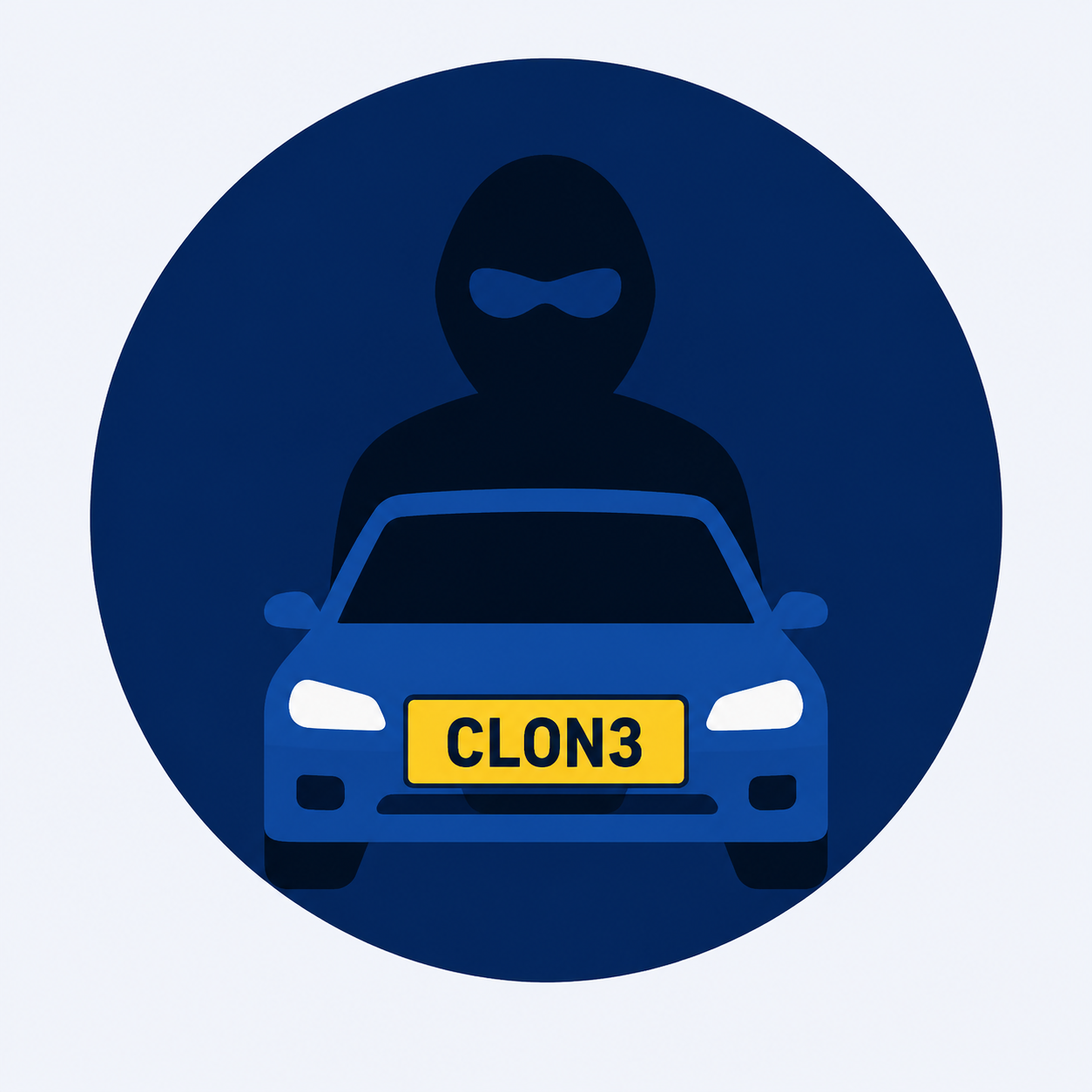
In many cases, the victim does not know anything is wrong until a penalty notice arrives in the post. By that time, the cloned vehicle may have been used for multiple offences. The police have limited resources to investigate each case, so the burden often falls on the victim to prove they were not at the location shown on the ANPR image. A uk plate verification network can help shift that dynamic by catching the mismatch earlier.
How Real-Time Alerts and Secure Verification Help
One of the most practical features of a modern verification network is the ability to set up real-time alerts. If you own a vehicle registration plate that you want to protect, you can register it with the service. Every time that plate is checked against the network, you receive an alert. If your plate is checked in a location you are not near, or on a vehicle that does not match yours, you know immediately that something is wrong. This gives you a head start to report the cloning to the UK police and to the DVLA.
Secure verification is the other side of the equation. When a business needs to confirm that a vehicle is legitimate - for example, when accepting a car for a service, for a hire, or for a resale - the network provides a verification result that is tamper-proof. The result comes from the original databases, not from a document that could be forged. This reduces the risk of accepting a cloned vehicle and the legal complications that follow.
For fleet operators, this kind of verification can be integrated into their daily processes. A driver checks in at the depot, the plate is scanned, and the network confirms that the vehicle is the one it is supposed to be. Any discrepancy triggers an alert to the fleet manager. That simple step can prevent a cloned vehicle from being used in the fleet's name, which could otherwise lead to penalty charges and reputational damage.
Connecting the Dots Between Databases
The strength of any verification network lies in the quality and breadth of the data it can access. In the UK, the key sources include the DVLA database for driver and vehicle licensing, the Motor Insurance Database for insurance status, CIFAS for known fraud indicators, and police records for stolen vehicles. Each of these databases holds a piece of the puzzle. On their own, they are useful but limited. When they are linked through a network, the picture becomes much clearer.
For example, a vehicle might have a valid MOT certificate and appear on the Motor Insurance Database, but if the same plate has been reported on two different cars in different cities on the same day, that is a strong indicator of cloning. A standard DVLA check would not reveal that conflict. A verification network that logs each check and compares it with previous results can spot the anomaly and flag it for further investigation.

This kind of cross-referencing is particularly valuable for online verification services that allow buyers to check a vehicle before purchase. If you are buying a used car, you can enter the plate number and get a verification result that includes not just the basic vehicle details but also any alerts linked to that plate. It is a simple way to avoid buying a car that has been involved in identity misuse.
Practical Steps Drivers Can Take
If you own a vehicle, there are a few sensible steps you can take to reduce your risk of becoming a victim of number plate theft and cloning. First, consider fitting tamper-resistant screws to your registration plates. These screws break off when removed, making it harder for someone to steal your plates and attach them to another car. Second, keep an eye on your vehicle registration plate physically. If it looks different - for example, if the reflective coating is worn unevenly - someone may have swapped it.
Third, and most importantly for this topic, use a uk plate verification network to register your plate and set up monitoring. That way, if your plate is used elsewhere, you will know about it quickly. Quick detection makes a huge difference when you are trying to convince the police and the DVLA that you are the victim, not the offender. The longer a cloned plate is in circulation, the harder it becomes to untangle the offences.
Trade-Offs and Limitations
No system is perfect, and a verification network has its limitations. It relies on the databases it queries being up to date. If a stolen plate is reported weeks after the theft, the network cannot flag it until the data is entered. There is also the issue of privacy. Some drivers are uncomfortable with their plate being checked regularly, even if they are the ones who registered it. A good service will give you control over who can check your plate and when you are alerted.
Another trade-off is cost. Running a network that accesses multiple databases in real time is not free. Some services charge a subscription fee, while others offer pay-per-check options. For an individual driver, the cost is usually modest compared with the hassle of dealing with cloned fines. For a business with a large fleet, the cost can be justified by the reduction in fraud-related losses and the time saved by automating checks.
Looking Ahead
The UK's approach to vehicle crime and fraud prevention is evolving. ANPR cameras are becoming more sophisticated, and the police are getting better at using data to track cloned vehicles. But the criminals are also adapting. They are using fake documents and online marketplaces to sell cloned cars. A uk plate verification network that is widely adopted by the public and by businesses can act as a deterrent. If criminals know that a plate is being monitored, they are less likely to target it.

For anyone who drives in the UK, understanding how plate verification works is no longer optional. It is a practical part of protecting yourself from the consequences of someone else's crime. Whether you are a private motorist or a fleet manager, the time to check your plate and register for monitoring is before the penalty notice arrives, not after.
In my experience, the drivers who take these steps are the ones who sleep easier. They know that if a fine or a charge comes through, they have the evidence and the alerts to back up their claim. That is the real value of a connected, secure verification network: peace of mind that your vehicle's identity is yours alone.